

Travel guide from India
Hong Kong
Hong Kong is a special administrative region of China with its own laws and currency, a few hours' flight from India, and to most visitors it feels like a separate country. Skyscrapers crowd both shores of Victoria Harbour, yet more than 70% of the territory is countryside, with hill trails, beaches and outlying islands. Families come for Disneyland and Ocean Park, and Indian visitors will find a Hindu temple, a gurdwara first built in 1901, Indian food in Tsim Sha Tsui and Buddhist vegetarian kitchens.
- Best time
- Oct–Dec
- First trip
- 4–5 nights
- Visa
- Visa-free, 14 days
- Return flights
- from ₹30,825 ●
- Delhi, checked in the last 48 h
Places to visit in Hong Kong
10 places in the order you would meet them on a first trip. Tap one for what to do there.
Tsim Sha Tsui and the harbourfront
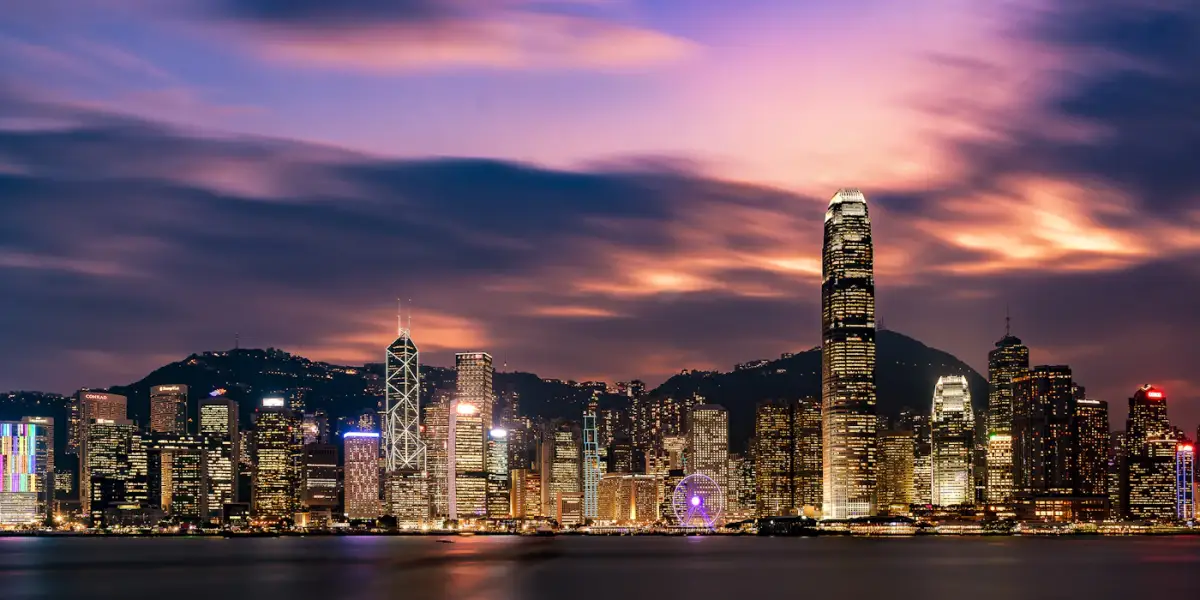
CityKowloon's main tourist drag, facing the island skyline, with the Star Ferry and a nightly light show.
4–5 nightsabout 30 min by train from Hong Kong airportBest Nov–Dec
Tsim Sha Tsui and the harbourfront
CityKowloon's main tourist drag, facing the island skyline, with the Star Ferry and a nightly light show.
Tsim Sha Tsui, the tip of the Kowloon peninsula, is Kowloon's main tourist area, with everything from backpacker guesthouses to luxury hotels. Its promenade, the classic spot for the Hong Kong Island skyline, runs east from the Star Ferry pier and the 1915 Clock Tower past the Hong Kong Museum of Art, while Nathan Road, Kowloon's oldest road, heads north to Mong Kok past the Kowloon Mosque, first built in 1896 for the British garrison's Indian Muslim soldiers. The Airport Express stops at nearby Kowloon station, and the MTR runs under Nathan Road.
What to do in Tsim Sha Tsui and the harbourfront
- Waterfront and Avenue of Stars. Walk east along the promenade to the Avenue of Stars, where more than a hundred film stars' handprints are set into the wooden handrails and a statue of Bruce Lee draws the photographers.
- A Symphony of Lights. Every night, lights and lasers on more than 40 buildings on both sides of the harbour move to music played on the promenade outside the Cultural Centre and on the Avenue of Stars; the show is called off under typhoon signal 3 or higher or a red or black rainstorm warning.
- Star Ferry to Central. The green-and-white ferries, crossing since 1888, reach Central in about nine minutes with the island skyline ahead of you, and a second route runs to Wan Chai.
- West Kowloon museums. Near Kowloon station, the West Kowloon Cultural District holds M+, a museum of 20th- and 21st-century visual culture, and the Hong Kong Palace Museum, which shows paintings, calligraphy and treasures from the collection of Beijing's Palace Museum.
- Indian food at Chungking Mansions. This 17-floor block on Nathan Road is crammed with budget Indian and Nepali restaurants and money changers; touts at the entrance can be pushy, so decide where you are eating before you go in.
The Hong Kong Observatory says many people consider November and December the best months, with sunshine, breezes and comfortable temperatures; tropical cyclones are most likely from July to September.
Sources: Hong Kong Fun in 18 Districts (Home Affairs Department): Tsim Sha Tsui Promenade, Hong Kong Fun in 18 Districts: Nathan Road, Hong Kong Fun in 18 Districts: The Kowloon Masjid and Islamic Centre, Hong Kong Fun in 18 Districts: West Kowloon Cultural District, Hong Kong Fun in 18 Districts: Star Ferry Pier, Avenue of Stars (official site): About, Avenue of Stars (official site): Clock Tower, Tourism Commission: A Symphony of Lights, details of the show, Tourism Commission: A Symphony of Lights, Hong Kong Palace Museum (official site), Star Ferry (official site), Transport Department: Ferry service details, MTR: Airport Express timetable and journey times, MTR: Airport Express Kowloon station, Hong Kong Observatory: Climate of Hong Kong, Wikivoyage: Hong Kong/Kowloon, Wikivoyage: Hong Kong (checked 14 Oct)
Central and the Peak
CityDay tripThe old colonial downtown, Man Mo Temple and Tai Kwun, and the Peak Tram up to the island's highest point.
about 30 min by train from Hong Kong airportBest Nov–Dec
Central and the Peak
CityDay tripThe old colonial downtown, Man Mo Temple and Tai Kwun, and the Peak Tram up to the island's highest point.
Central, once called Victoria, is the political and financial heart of Hong Kong on the island's north shore, and the Airport Express ends here at Hong Kong station. From Queen's Road Central, covered escalators climb past the restaurants of SoHo and the antique shops of Hollywood Road to the Mid-Levels, and the Peak Tram rises from Garden Road to the Peak, about 552 m up and the highest point on Hong Kong Island. Pick a clear day for the Peak, as haze or cloud can hide the view.
What to do in Central and the Peak
- Peak Tram. Running since 1888 and the first cable funicular in Asia, the tram climbs past the Mid-Levels to the Peak Tower, which has a viewing platform.
- Peak Circle Walk. Lugard Road and Harlech Road loop around the summit in about an hour, looking down on Central and the harbour on one side and out to Lamma and the outlying islands on the other.
- Central–Mid-Levels escalators. About 800 m of escalators, travelators and walkways that run downhill in the morning rush and uphill the rest of the day.
- Man Mo Temple. Chinese merchants built this Hollywood Road compound between 1847 and 1862 for the gods of literature and of martial arts, and its halls are hazy with smoke from burning incense coils.
- Tai Kwun, Lan Kwai Fong and SoHo. Victoria Prison, the Central Magistracy and the old Central Police Station, all declared monuments, opened from 2018 as Tai Kwun, a centre for heritage and arts, close to the bars and restaurants of Lan Kwai Fong and SoHo.
November and December bring plenty of sunshine and comfortable temperatures, the Observatory says, while drizzle and fog in March and April can cut visibility.
Sources: Hong Kong Fun in 18 Districts: The Peak and Peak Tram, Hong Kong Fun in 18 Districts: Central to Mid-Levels Escalator and Walkway System, Hong Kong Fun in 18 Districts: Tai Kwun, Hong Kong Fun in 18 Districts: Lan Kwai Fong, Hong Kong Fun in 18 Districts: SoHo, Antiquities and Monuments Office: Man Mo Temple Compound, Tai Kwun (official site): Our story, MTR: Airport Express timetable and journey times, Hong Kong Observatory: Climate of Hong Kong, Wikivoyage: Hong Kong/Central, Wikivoyage: Hong Kong (checked 14 Oct)
Mong Kok and Yau Ma Tei
CityDay tripStreet markets for clothes, goldfish, flowers and jade, Temple Street's night market and a 19th-century Tin Hau temple.
about 1 h by train from Hong Kong airport
Mong Kok and Yau Ma Tei
CityDay tripStreet markets for clothes, goldfish, flowers and jade, Temple Street's night market and a 19th-century Tin Hau temple.
North of Tsim Sha Tsui up Nathan Road, Mong Kok squeezes a huge range of shops and street markets into less than a square kilometre, and many of its streets go by what they sell: goldfish, flowers or sneakers. Yau Ma Tei, just to the south, keeps the Tin Hau temple that gave Temple Street its name, and in the evening the street fills with market stalls, food stalls and fortune-tellers. Prince Edward, Mong Kok and Yau Ma Tei MTR stations cover the area.
What to do in Mong Kok and Yau Ma Tei
- Ladies' Market. Stalls on Tung Choi Street, from Argyle Street to Dundas Street, sell cheap clothes, watches, bags, cosmetics and toys; bargain hard, as tourists are quoted higher prices and some branded goods are fakes.
- Temple Street Night Market. After dark the street fills with market stalls and seafood food stalls, while fortune-tellers and chess players gather under the flyover and Cantonese opera is sung in booths near Public Square Street.
- Tin Hau Temple, Yau Ma Tei. Rebuilt on this site in 1878 and dedicated to the sea goddess Tin Hau, it heads Kowloon's largest surviving Tin Hau temple compound, declared a monument in 2020.
- Goldfish, flowers and birds. Walk north from the aquarium shops of Goldfish Street to the Flower Market's 100-plus florists and on to Yuen Po Street Bird Garden, a Chinese-style garden with about 70 stalls selling pet birds, seed and other supplies.
- Jade Market. Since 2020 the jade traders have gathered at 251 Shanghai Street, where a few letter-writers, among the last of their old trade in the city, still offer calligraphy and help with forms.
Sources: Hong Kong Fun in 18 Districts: Temple Street Night Market, Hong Kong Fun in 18 Districts: Tung Choi Street (Ladies' Market), Hong Kong Fun in 18 Districts: Tung Choi Street (Goldfish Market), Hong Kong Fun in 18 Districts: Mong Kok Flower Market, Hong Kong Fun in 18 Districts: Yuen Po Street Bird Garden, Hong Kong Fun in 18 Districts: Tin Hau Temple, Yau Ma Tei, Hong Kong Fun in 18 Districts: Jade Market and Jade Street, MTR: Airport Express timetable and journey times, Wikivoyage: Hong Kong/Kowloon, Wikivoyage: Hong Kong (checked 14 Oct)
Ocean Park
Theme parkDay tripGiant pandas, a big aquarium, penguins and thrill rides over the sea, linked by cable car on the island's south side.
about 1 h by train from Hong Kong airport
Ocean Park
Theme parkDay tripGiant pandas, a big aquarium, penguins and thrill rides over the sea, linked by cable car on the island's south side.
Ocean Park, set up in 1977 on Hong Kong Island's south side, is run as a non-profit public park for recreation and education, which shows in its mix of animal exhibits and rides. It is split into two areas, The Waterfront and The Summit, joined by a cable car and a train ride styled as a submarine trip. The South Island line's Ocean Park MTR station is at the entrance, a short ride from Admiralty.
What to do in Ocean Park
- Giant pandas. The Giant Panda Adventure houses Ying Ying, Le Le and their Hong Kong-born twins, with red pandas alongside, and a second pair from Sichuan, An An and Ke Ke, lives in the Sichuan Treasures exhibit; animals may be kept off view without notice.
- Cable car to The Summit. The 1.5 km cable car links the two halves of the park with views over the south coast and the sea, while the Ocean Express train covers the climb in about four minutes.
- Grand Aquarium and Shark Mystique. The Grand Aquarium holds about 5,000 fish of more than 400 species, and Shark Mystique shows over a hundred sharks and rays, sawfish among them.
- Penguins in the cold. South Pole Spectacular keeps more than 90 king, rockhopper and gentoo penguins at 8–10°C, so bring a layer even in summer.
- Thrill rides. The Hair Raiser is a floorless roller coaster that dangles riders high over the South China Sea, and the 72 m Ocean Park Tower lifts a slowly turning viewing cabin above the coast.
Sources: Ocean Park (official site): Attractions, Ocean Park (official site): Panda Zone, Tourism Commission: Ocean Park, Hong Kong Fun in 18 Districts: Ocean Park and Water World Ocean Park, MTR: Airport Express timetable and journey times, Wikivoyage: Hong Kong/Southern District (checked 14 Oct)
Repulse Bay, Stanley and the Dragon's Back
BeachDay tripThe south side's beaches, Stanley's market and seafront, and the Dragon's Back ridge walk down to Big Wave Bay.
about 1 h from Hong Kong airport
Repulse Bay, Stanley and the Dragon's Back
BeachDay tripThe south side's beaches, Stanley's market and seafront, and the Dragon's Back ridge walk down to Big Wave Bay.
The south side of Hong Kong Island faces the South China Sea, away from the harbour bustle, with the island's best beaches and some of its most expensive homes. Repulse Bay's broad crescent of sand is the most popular beach, Stanley adds a seafront promenade, a market and a Tin Hau temple from 1767, and further east the Dragon's Back ridge trail ends at the surf beach of Big Wave Bay. Buses from Exchange Square in Central cross the island to Repulse Bay and Stanley.
What to do in Repulse Bay, Stanley and the Dragon's Back
- Repulse Bay Beach. The wide crescent-shaped beach is the south side's biggest and suits families with small children; at its eastern end the Kwun Yam Shrine has statues of Kwun Yam and Tin Hau.
- Stanley Market. Shops and stalls on Stanley New Street and Stanley Market Road sell clothes, souvenirs, handicrafts and art; prices are pitched at tourists, so haggle.
- Murray House. Built in 1846 as British army barracks on the site of today's Bank of China Tower in Central, it was taken apart in 1982 and rebuilt from more than 3,000 numbered pieces on the Stanley waterfront.
- Tin Hau Temple, Stanley. Built in 1767 on Stanley Main Street and last restored in 2002, the temple honours the sea goddess Tin Hau and is busiest at her festival in the third lunar month.
- Hike the Dragon's Back. Stage 8 of the Hong Kong Trail follows the rolling ridge from Wan Cham Shan to Shek O Peak, then drops through woods to end at Big Wave Bay; allow two to three hours and carry plenty of water, as the ridge has little shade.
Sources: Hong Kong Fun in 18 Districts: Repulse Bay, Hong Kong Fun in 18 Districts: Stanley and its market, Hong Kong Fun in 18 Districts: Stanley Plaza and Murray House, Hong Kong Fun in 18 Districts: Tin Hau Temple, Stanley, Hong Kong Fun in 18 Districts: Shek O Country Park, AFCD: Shek O Country Park, Wikivoyage: Hong Kong/Southern District, Wikivoyage: Hong Kong (checked 14 Oct)
Hong Kong Disneyland
Theme parkDay tripA compact Disney park on Lantau, the airport's island, with World of Frozen, Toy Story Land and a fairy-tale castle.
about 30 min by train from Hong Kong airport
Hong Kong Disneyland
Theme parkDay tripA compact Disney park on Lantau, the airport's island, with World of Frozen, Toy Story Land and a fairy-tale castle.
Hong Kong Disneyland Resort covers 126 ha at Penny's Bay on north Lantau, the island that also holds the airport, with the theme park, three Disney hotels and Inspiration Lake. The park, Asia's second Disneyland, opened in September 2005 and has fewer rides than other Disney parks, so arriving at opening on a weekday leaves time for every ride and show by mid-afternoon. Disneyland Resort line trains, with specially designed carriages, run from Sunny Bay on the Tung Chung line.
What to do in Hong Kong Disneyland
- World of Frozen. Disney calls it the first and largest Frozen-themed land anywhere: walk through Arendelle past its castle and clock tower, take Frozen Ever After to meet Elsa at her Ice Palace, or ride the sleds of Wandering Oaken's Sliding Sleighs.
- Main Street, USA and the castle. Enter along the old-American Main Street, USA to the castle in Fantasyland, the park's landmark, with Disney characters turning up for photos around the park.
- Toy Story Land and Grizzly Gulch. Other lands include Toy Story Land, Grizzly Gulch, built as an abandoned town of the American West, Mystic Point, Adventureland's jungle and space-themed Tomorrowland.
- Parades and fireworks. Parades and the fireworks show run on selected dates only, so check the park calendar for your day before planning around them.
- Inspiration Lake. About 15 minutes' walk from Disneyland Resort station, this man-made lake has a 1.5 km jogging trail, an arboretum, and paddle boats and surrey bikes for hire.
Sources: Hong Kong Disneyland (official site): World of Frozen, The Walt Disney Company: World of Frozen opens at Hong Kong Disneyland Resort, Hong Kong Disneyland (official site): Visiting Hong Kong, Hong Kong Disneyland (official site): Transportation by MTR, Hong Kong Fun in 18 Districts: Hong Kong Disneyland Resort, Tourism Commission: Hong Kong Disneyland Resort, Wikivoyage: Hong Kong/Lantau, Wikivoyage: Hong Kong (checked 14 Oct)
Lantau: Ngong Ping and Tai O
HeritageDay tripCable car over the hills to the Big Buddha and Po Lin Monastery, then a stilt-house fishing village, near the airport.
about 1 h from Hong Kong airport
Lantau: Ngong Ping and Tai O
HeritageDay tripCable car over the hills to the Big Buddha and Po Lin Monastery, then a stilt-house fishing village, near the airport.
Lantau, Hong Kong's largest island, carries the airport on its north shore, but more than half of it is country park. The Ngong Ping 360 cable car climbs 5.7 km from Tung Chung, close to the airport, to the Ngong Ping plateau, where the bronze Big Buddha sits on a hilltop facing Po Lin Monastery, and buses run on to the stilt-house fishing village of Tai O. It makes a good last day before a flight home, but cable-car queues can be long, especially at weekends.
What to do in Lantau: Ngong Ping and Tai O
- Ngong Ping 360 cable car. The 25-minute ride crosses Tung Chung Bay, turns over the airport island and climbs above North Lantau Country Park; Crystal cabins have glass floors, and large suitcases cannot go on board, though the Tung Chung terminal has left luggage.
- The Big Buddha. Climb 268 steps to the bronze Tian Tan Buddha, 34 m tall including its lotus throne and base, opened in 1993 and modelled on Siddhartha, who attained enlightenment under the Bodhi tree; the hall in its base keeps a relic of the Buddha.
- Po Lin Monastery's vegetarian kitchen. Founded in 1906 by three Jiangsu monks, the monastery serves Buddhist vegetarian meals, usually a soup, a fried dish and vegetables with rice, and its snack shop is known for homemade bean curd dessert.
- Wisdom Path. Near the Buddha, 38 timber columns 8 to 10 m tall carry the Heart Sutra in the calligraphy of Jao Tsung-I, set out in a figure of eight with the highest column left blank to stand for emptiness.
- Tai O. Bus 21 runs from Ngong Ping to this fishing village in about 20 minutes; houses stand on stilts over the creeks, short boat trips loop the waterways, and the village is known for shrimp paste and salted fish.
Sources: Ngong Ping 360 (official site): Overview, Ngong Ping 360 (official site): Cable cars, Ngong Ping 360 (official site): Tourist guide, Ngong Ping 360 (official site): Big Buddha, Ngong Ping 360 (official site): Po Lin Monastery, Ngong Ping 360 (official site): Tai O Fishing Village, Po Lin Monastery (official site): Vegetarian food and souvenirs, Po Lin Monastery (official site): The Big Buddha, Po Lin Monastery (official site): History, Hong Kong Fun in 18 Districts: Po Lin Monastery and The Big Buddha, Hong Kong Fun in 18 Districts: Wisdom Path, Hong Kong Fun in 18 Districts: Tai O, Hong Kong Fun in 18 Districts: Lantau Island, Tourism Commission: Wisdom Path, Wikivoyage: Hong Kong/Lantau, Wikivoyage: Hong Kong International Airport (checked 14 Oct)
Sai Kung and the Geopark
BeachDay tripHarbourside seafood, boat trips to geopark islands, hexagonal rock columns and four of Hong Kong's most famous beaches.
about 1 h 30 min from Hong Kong airportBest Oct–Feb
Sai Kung and the Geopark
BeachDay tripHarbourside seafood, boat trips to geopark islands, hexagonal rock columns and four of Hong Kong's most famous beaches.
Sai Kung town, in the east of the New Territories, grew from a market for fishermen and villagers about a century ago and is now the gateway to some of Hong Kong's best countryside. Around it lie the Sai Kung Volcanic Rock Region of the Hong Kong UNESCO Global Geopark, known for its hexagonal rock columns, and Sai Kung East Country Park, with High Island Reservoir, the remote beaches of Tai Long Wan and the start of the MacLehose Trail. From the city, take the MTR to Choi Hung and then the 1M minibus over the hills.
What to do in Sai Kung and the Geopark
- Seafood on the waterfront. Restaurants along the harbourfront, nicknamed Seafood Street, let you choose fish and shellfish live from the tanks outside and cook them as you like.
- Sampan to Yim Tin Tsai. Sampans can be hired on the waterfront for the islets; one is Yim Tin Tsai, a Hakka salt-making village, now without residents, whose restored 1890 Catholic chapel and salt pans have both won UNESCO Asia-Pacific heritage conservation awards.
- Sharp Island. Reached by hired boat, this geosite has two beaches, Hap Mun Bay and Kiu Tsui, and a 200 m sand tombolo to the islet of Kiu Tau that only shows at low tide.
- East Dam columns. At the eastern end of High Island Reservoir, the largest in the territory, the dam is armoured with giant dolosse and set against stacks of six-sided rhyolite columns.
- Tai Long Wan beaches. Section 2 of the MacLehose Trail climbs over to Tai Long Wan, four remote bays, Sai Wan and Ham Tin Wan among them, that the AFCD counts among Hong Kong's most famous beaches and that are nearly empty on weekdays.
October to February is the cooler season most locals choose for longer hikes such as the trail to Tai Long Wan; in summer, heat, humidity and mosquitoes make any trek hard work.
Sources: Hong Kong Fun in 18 Districts: Sai Kung Market and Sai Kung Hoi Pong Square, Hong Kong Fun in 18 Districts: Yim Tin Tsai, Hong Kong Fun in 18 Districts: Sharp Island, Hong Kong Fun in 18 Districts: Pak Tam Chung and MacLehose Trail (Sai Kung Sections), AFCD: Sai Kung East Country Park, GovHK: Hong Kong's natural scenery (Geopark), Wikivoyage: Hong Kong/New Territories, Wikivoyage: Hong Kong (checked 14 Oct)
Lamma Island
IslandDay tripAn island without cars, half an hour by ferry from Central, with a village-to-village walk, a sunset beach and seafood.
about 1 h 30 min by boat from Hong Kong airport
Lamma Island
IslandDay tripAn island without cars, half an hour by ferry from Central, with a village-to-village walk, a sunset beach and seafood.
Lamma, Hong Kong's third-largest island, has no cars, and ferries from Central Pier 4 reach Yung Shue Wan, its main village, in about 27 minutes. A footpath crosses the island past Hung Shing Ye beach and a hilltop lookout to Sok Kwu Wan, a strip of seafood restaurants beside the fish farms, with the island's power station in view along the way. Ferries also run from Sok Kwu Wan back to Central, so you can walk one way.
What to do in Lamma Island
- Walk Yung Shue Wan to Sok Kwu Wan. The signposted path takes about 60 to 90 minutes and suits all ages, but it has a few steep stretches, so wear a hat and carry water in summer.
- Hung Shing Ye Beach. A short walk from Yung Shue Wan, the island's most popular beach has fine sand and changing rooms, and people stay on for the sunset.
- Seafood at Sok Kwu Wan. A row of seafood restaurants faces the bay's fish rafts, and Lamma Fisherfolk's Village there shows photos and gear from local fishing life.
- Kamikaze Cave. On the shore path from Lo So Shing to Sok Kwu Wan, this cave is said to have been dug by the Japanese army in the Second World War to hide suicide motorboats, though the war ended before it was finished.
- Yung Shue Wan Main Street. One of the island's busiest streets mixes seafood restaurants with cafés, bars and shops selling crafts and local snacks.
Sources: Hong Kong Fun in 18 Districts: Lamma Island, Hong Kong Fun in 18 Districts: Hung Shing Ye Beach, Hong Kong Fun in 18 Districts: Sok Kwu Wan Fish Rafts and Lamma Fisherfolk's Village, Hong Kong Fun in 18 Districts: Kamikaze Cave, Hong Kong Fun in 18 Districts: Yung Shue Wan Main Street, Transport Department: Ferry service details (Central to Yung Shue Wan and Sok Kwu Wan), MTR: Airport Express timetable and journey times, Wikivoyage: Hong Kong/Lamma, Wikivoyage: Hong Kong (checked 14 Oct)
Wan Chai and Causeway Bay
CityThe island-side alternative base: street markets, late shopping, trams, the Hindu temple and the Sikh gurdwara.
4–5 nightsabout 30 min by train from Hong Kong airport
Wan Chai and Causeway Bay
CityThe island-side alternative base: street markets, late shopping, trams, the Hindu temple and the Sikh gurdwara.
Wan Chai and Causeway Bay, just east of Central on the island's north shore, are its most visited neighbourhoods and a good alternative base to Tsim Sha Tsui, with hotels at every budget. Wan Chai mixes outdoor street markets with its well-known nightlife, Causeway Bay is a crowded shopping district where you can eat and shop until late, and inland Happy Valley has the racecourse and the temple at the centre of Hong Kong's Hindu community. The Island line MTR and the trams run through, and the Star Ferry crosses from Wan Chai to Tsim Sha Tsui.
What to do in Wan Chai and Causeway Bay
- Hindu Temple, Happy Valley. Built in 1953 and graded a historic building, the temple run by the Hindu Association of Hong Kong is the centre of the city's Hindu community, which marks Diwali, Navratri, Holi and Ganesh Chaturthi there.
- Khalsa Diwan Sikh Temple. Hong Kong's first Sikhs came from Punjab with the British forces, and their temple on Queen's Road East dates from 1901; today it has two prayer halls and a community kitchen serving langar.
- Happy Valley Racecourse. Built in 1845, the course holds race meetings through the year apart from a summer break, the evening ones ringed by lit-up towers, and the Hong Kong Racing Museum is beside the track.
- Golden Bauhinia Square. Beside the Convention Centre, where Hong Kong was handed back to China in 1997, the gilded bauhinia sculpture stands on a harbour promenade that the Tourism Commission lists among the best places to watch A Symphony of Lights.
- Trams and Causeway Bay. Ride the narrow double-decker trams, upstairs for the view, along the north shore to Causeway Bay's department stores and malls, and to Victoria Park, which hosts Hong Kong's largest Lunar New Year fair.
Sources: GovHK fact sheet: Religion and custom (January 2026), Khalsa Diwan Sikh Temple (official site): History, Hong Kong Fun in 18 Districts: Happy Valley Racecourse and Hong Kong Racing Museum, Hong Kong Fun in 18 Districts: Golden Bauhinia Square, Hong Kong Fun in 18 Districts: Causeway Bay Shopping Area, Hong Kong Fun in 18 Districts: Victoria Park, Tourism Commission: A Symphony of Lights, details of the show, Transport Department: Ferry service details, MTR: Airport Express timetable and journey times, Wikivoyage: Hong Kong/Eastern District, Wikivoyage: Hong Kong (checked 14 Oct)
A first trip: 4–5 nights
- Tsim Sha Tsui and the harbourfront · 4–5n
- →Central and the Peak
- →Mong Kok and Yau Ma Tei
- →Ocean Park
- →Repulse Bay, Stanley and the Dragon's Back
- →Hong Kong Disneyland
- →Lantau: Ngong Ping and Tai O
Base in Tsim Sha Tsui and spend the first days on foot, by MTR and on the Star Ferry around the harbour, Central and the Peak, and the Mong Kok markets, then give a day each to Ocean Park, the south-side beaches and Stanley, and Disneyland, leaving Ngong Ping for the end, as its cable car starts in Tung Chung, a short bus ride from the airport. November and December are the most comfortable months, while typhoons are most likely from July to September, when ferries and the harbour light show can be called off, so keep island and hill days flexible; if you prefer the island side, base in Wan Chai or Causeway Bay instead.
Getting around
The MTR is the quickest way around: the Airport Express reaches Hong Kong station in Central in 24 minutes, other lines run under Nathan Road and along the island's north shore, and eating and drinking are banned on trains and inside the fare gates. Pay with an Octopus card, which works across the MTR, buses, trams and ferries; the Star Ferry crosses between Tsim Sha Tsui and Central in about nine minutes, and ferries from Central's piers serve Lamma and Lantau. Taxis are red in the city, green in the New Territories and blue on Lantau.
Peak Shoulder Off-season
The Hong Kong Observatory describes November and December as months of pleasant breezes, sunshine and comfortable temperatures, January and February as cloudier with cold fronts, March and April as milder but humid, and May to August as hot and humid with about 80% of the year's rain falling between May and September. Tropical cyclones are most likely from July to September.
Flights to Hong Kong from India
Visa for Indian passports
Indian passport holders can visit Hong Kong without a visa for up to 14 days. Free online pre-arrival registration (instant) is mandatory before you board.
Before you book, check the Ministry of External Affairs travel advisories for the latest guidance.
Hong Kong: questions
What are the best places to visit in Hong Kong?
Tsim Sha Tsui and the harbourfront: Kowloon's main tourist drag, facing the island skyline, with the Star Ferry and a nightly light show. Central and the Peak: The old colonial downtown, Man Mo Temple and Tai Kwun, and the Peak Tram up to the island's highest point. Mong Kok and Yau Ma Tei: Street markets for clothes, goldfish, flowers and jade, Temple Street's night market and a 19th-century Tin Hau temple. Ocean Park: Giant pandas, a big aquarium, penguins and thrill rides over the sea, linked by cable car on the island's south side. Repulse Bay, Stanley and the Dragon's Back: The south side's beaches, Stanley's market and seafront, and the Dragon's Back ridge walk down to Big Wave Bay. Hong Kong Disneyland: A compact Disney park on Lantau, the airport's island, with World of Frozen, Toy Story Land and a fairy-tale castle. Lantau: Ngong Ping and Tai O: Cable car over the hills to the Big Buddha and Po Lin Monastery, then a stilt-house fishing village, near the airport. Sai Kung and the Geopark: Harbourside seafood, boat trips to geopark islands, hexagonal rock columns and four of Hong Kong's most famous beaches. Lamma Island: An island without cars, half an hour by ferry from Central, with a village-to-village walk, a sunset beach and seafood. Wan Chai and Causeway Bay: The island-side alternative base: street markets, late shopping, trams, the Hindu temple and the Sikh gurdwara.
How many days do you need for Hong Kong?
A first trip takes about 4–5 nights: Tsim Sha Tsui and the harbourfront (4–5 nights), Central and the Peak (1 night), Mong Kok and Yau Ma Tei (1 night), Ocean Park (1 night), Repulse Bay, Stanley and the Dragon's Back (1 night), Hong Kong Disneyland (1 night), Lantau: Ngong Ping and Tai O (1 night). Base in Tsim Sha Tsui and spend the first days on foot, by MTR and on the Star Ferry around the harbour, Central and the Peak, and the Mong Kok markets, then give a day each to Ocean Park, the south-side beaches and Stanley, and Disneyland, leaving Ngong Ping for the end, as its cable car starts in Tung Chung, a short bus ride from the airport. November and December are the most comfortable months, while typhoons are most likely from July to September, when ferries and the harbour light show can be called off, so keep island and hill days flexible; if you prefer the island side, base in Wan Chai or Causeway Bay instead.
What is the best time to visit Hong Kong?
Peak season is Oct–Dec. The Hong Kong Observatory describes November and December as months of pleasant breezes, sunshine and comfortable temperatures, January and February as cloudier with cold fronts, March and April as milder but humid, and May to August as hot and humid with about 80% of the year's rain falling between May and September. Tropical cyclones are most likely from July to September.
Do Indians need a visa for Hong Kong?
Indian passport holders can visit Hong Kong without a visa for up to 14 days. Free online pre-arrival registration (instant) is mandatory before you board.
How much is a flight to Hong Kong from India?
The lowest return fare FlyBun has seen in the last 14 days is ₹30,825, Delhi to Hong Kong, for April 2027 departures. Fares change daily.
Places and things to do are written by FlyBun from official tourism, heritage and park sources, linked under each place, last checked 14 Oct. We leave out entry fees and opening hours because they change; check them before you go.
Watch a route and FlyBun alerts you free when its fare drops.