Jeddah JED
Main airportServes Jeddah's Al-Balad and the drive up to Taif, when travel advice allows: disruption and cancellations are very likely, so check current advice.
Jeddah month by month: weather and fares →

Travel guide from India
Saudi Arabia covers most of the Arabian Peninsula, a few hours' flight west of India, and opened up to leisure tourism only in 2019. It pairs the Nabataean tombs of Hegra and the mud-brick old capital of Diriyah with Jeddah's coral-stone old town, Red Sea reefs and cool southern mountains. The kingdom has large Indian, Pakistani and Bangladeshi communities whose curry shops serve thalis, and many restaurants will leave the meat out of a dish if you ask.
Your first trip
When travel advice allows, fly into Riyadh for the city, Diriyah and a sunset at the Edge of the World, fly on to AlUla for Hegra and the old town, then fly to Jeddah for Al-Balad and the Corniche and finish with a drive up the escarpment to Taif. The loop suits the cooler months, roughly November to March; in summer, when the lowlands bake, Taif is the mountain escape, and late March or April brings Taif's rose harvest.
Flying into Riyadh for 8–11 nights? FlyBun can check Google every day for the dates you can travel and email you when that trip gets cheaper.
When to go
Best monthsShoulderHotter, wetter or busierThis monthBlue highs: a wet month, 150 mm or more
Temperatures: NASA POWER (Prediction Of Worldwide Energy Resources) Daily API v2.10.0, MERRA-2 based, 2001-2020 monthly means of daily values, 2001–2020 monthly means.
No official Saudi tourism page describing seasons could be opened, so these ratings are derived from the NASA POWER climate normals: highs sit at or above 38°C from May to October, ease to 31 to 36°C in November, March and April, and settle at 29 to 31°C from December to February with almost no rain in any month.
Places to visit
8 places in the order you would meet them on a first trip. Tap one for what to do there.
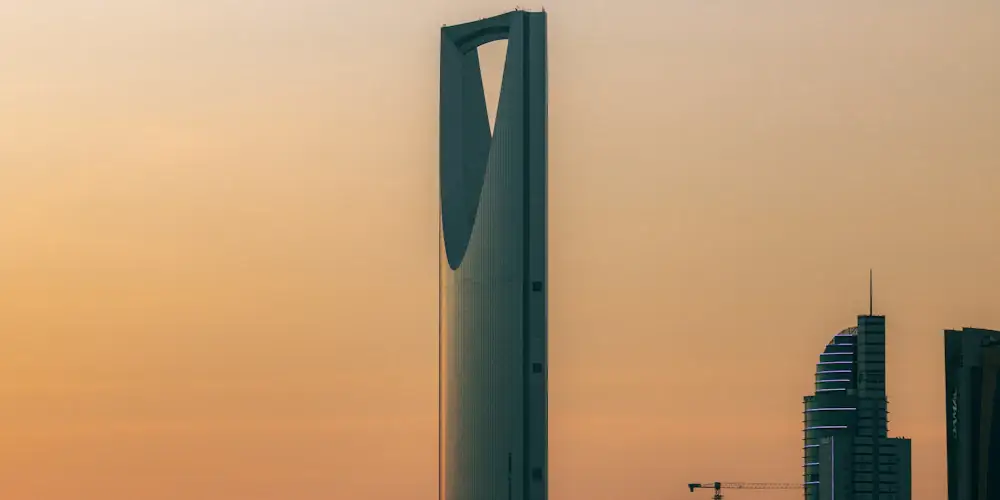
The capital: Masmak Fort, the National Museum, the Kingdom Centre's Sky Bridge, old souqs and cheap Indian food.
What to do here →
Riyadh, the capital, lies on the Tuwaiq escarpment near the middle of the country and sprawls so far that you will rely on taxis, ride-hailing or the six-line metro. The old core in the south holds Masmak Fort, the souqs and the National Museum, while the towers of Olaya, the Kingdom Centre among them, mark the modern north. For a cheap, filling meal, the city has countless small Indian and Pakistani restaurants.
Visit Saudi picks November to March, Riyadh's winter and desert camping season, when highs average around 23°C against about 43°C in summer.
Sources: Visit Saudi: Riyadh, Visit Saudi: Al Masmak Palace, Visit Saudi: The National Museum of Saudi Arabia, Visit Saudi: Kingdom Centre, Visit Saudi: Souq Al Zal, Visit Saudi: Riyadh Metro, Visit Saudi: Getting around Saudi, Wikivoyage: Riyadh, Wikivoyage: Saudi Arabia (checked 14 Oct)
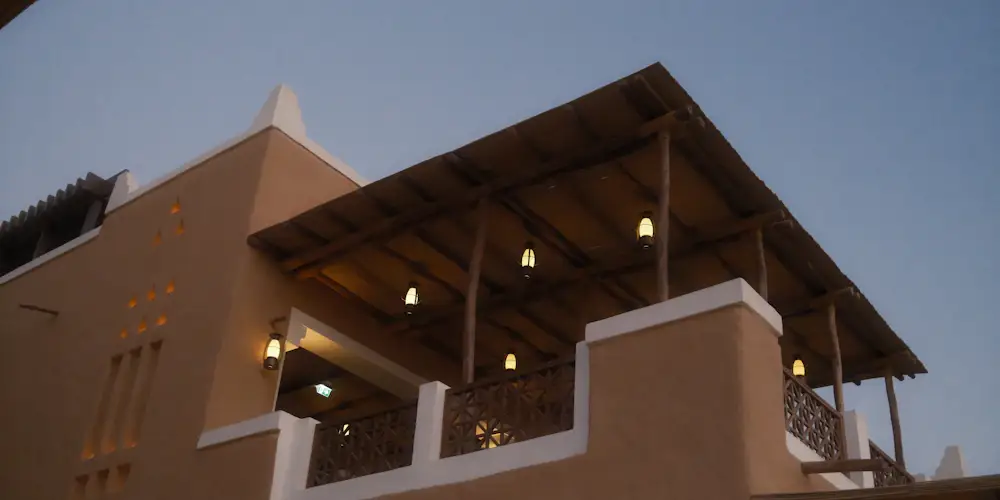
The mud-brick first capital of the Saudi state, a UNESCO site, with dining above Wadi Hanifa at Bujairi Terrace.
What to do here →
On Riyadh's north-western edge, about 15 km from the King Abdullah Financial District, Diriyah was the Al Saud family's capital from 1727 until Ottoman forces defeated it in 1818. Its At-Turaif district, built of mud brick in the Najdi style in the mid-18th century, joined UNESCO's World Heritage list in 2010 and opened to visitors again in 2022 after restoration. It is a short drive from Riyadh's hotels, so it works as a day or evening out from the city.
Visit Saudi's Diriyah guide names November to February as the winter season; come early or late in the day for the golden light on the mud walls.
Sources: Visit Saudi: Diriyah, Visit Saudi: At-Turaif District, Visit Saudi: A Full Day in Diriyah, Visit Saudi: Bujairi Terrace, Visit Saudi: Wadi Hanifa, Visit Saudi: Al Samhaniya, Wikivoyage: Diriyah, Wikivoyage: Riyadh (checked 14 Oct)
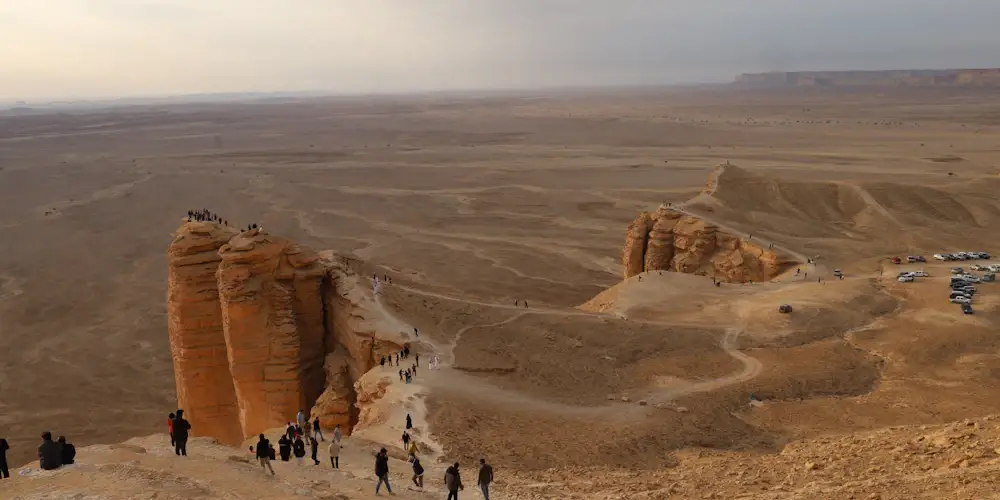
Sheer cliffs at the end of the Tuwaiq escarpment, seen at sunset on a 4WD or tour trip from Riyadh.
What to do here →
The Edge of the World is a run of sheer cliffs at the end of the Tuwaiq escarpment, about 100 km north-west of Riyadh, where the plateau drops away to a wide desert plain. There are no services out here and much of the way in is rough dirt track, so go with a tour or in a four-wheel drive and make it a half-day trip timed for sunset.
Visit Saudi gives November to March as the winter and camping season around Riyadh, when daytime highs are near 23°C.
Sources: Visit Saudi: Edge of the World, Visit Saudi: Riyadh, Wikivoyage: Riyadh (checked 14 Oct)
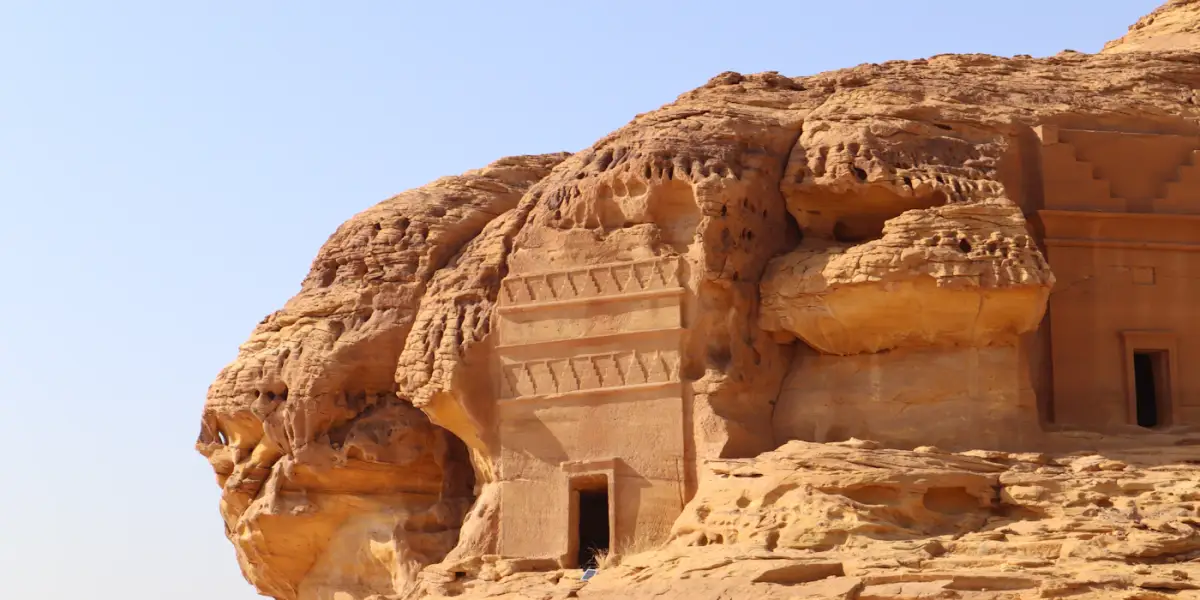
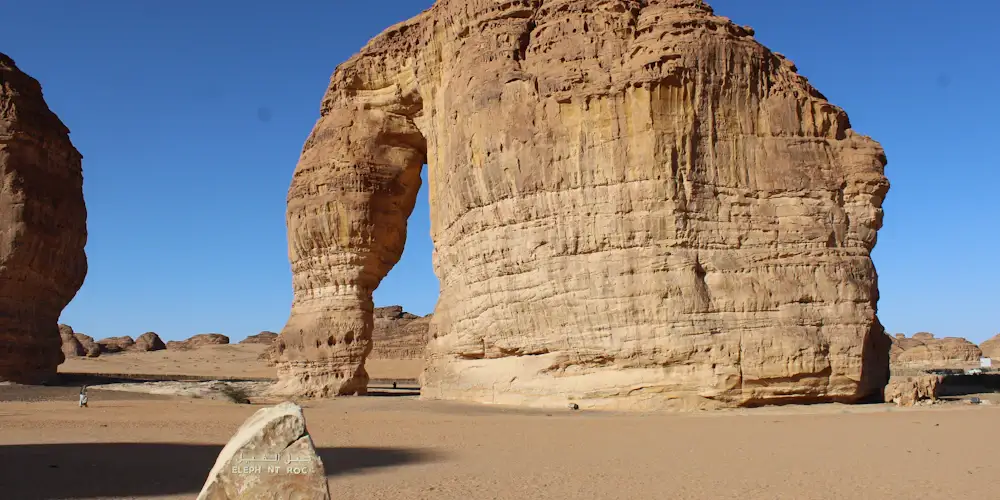
Hegra's Nabataean tombs, Saudi Arabia's first UNESCO site, plus a mud-brick old town and Elephant Rock.
What to do here →
AlUla is an oasis valley of date palms and sandstone cliffs in the north-west, about two hours by air from Riyadh, with flights from Jeddah too, or three hours' drive from Madinah. A royal commission has been developing it for visitors since 2017, and it is the base for Hegra, 22 km away, and for the ancient sites of Dadan and Jabal Ikmah. Its oasis has some 2.3 million date palms, with signposted trails winding through the groves past mud-brick ruins and working farms.
Visit Saudi gives October to April, its winter season, when highs are around 25°C against 45°C in summer; even then, sightsee early or late in the day.
Sources: Visit Saudi: AlUla, Visit Saudi: Hegra in AlUla, Visit Saudi: AlUla Old Town, Visit Saudi: Maraya Concert Hall (getting there), Experience AlUla: Hegra, Experience AlUla: Old Town, Experience AlUla: Elephant Rock, Experience AlUla: Dadan, Experience AlUla: Jabal Ikmah, Experience AlUla: Harrat Viewpoint, Experience AlUla: AlUla Oasis, Experience AlUla: Getting to and around AlUla, Wikivoyage: Al-Ula, Wikivoyage: Hegra (checked 14 Oct)
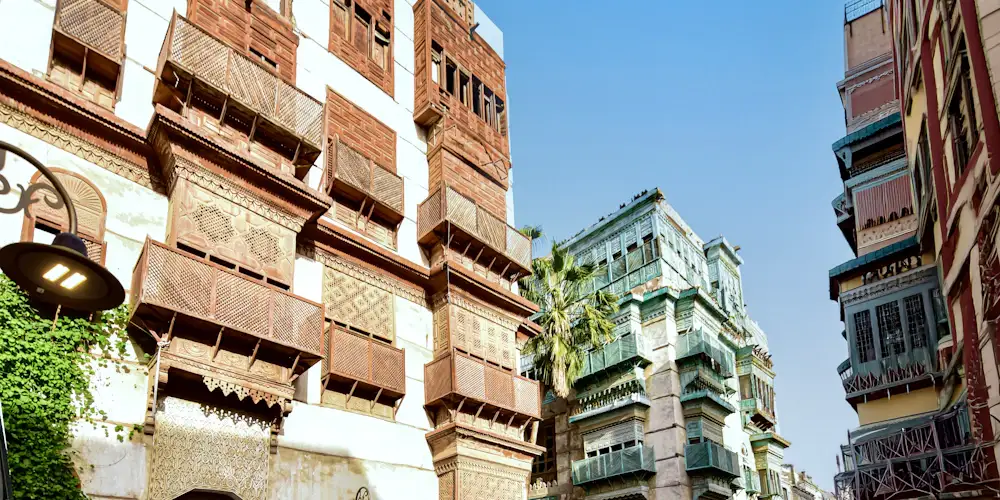
Al-Balad's coral-stone houses and souqs, a seafront Corniche with a towering fountain, and Red Sea diving.
What to do here →
Jeddah, the kingdom's second-largest city, has been a Red Sea port for centuries and once traded across the Indian Ocean; its old quarter, Al-Balad, has been a UNESCO World Heritage Site since 2014. Tall houses of coral stone with carved wooden balconies called rawasheen line the alleys and souqs, while the modern city stretches north along a seafront Corniche of about 30 km. It is also the usual starting point for the drive up to Taif.
Visit Saudi gives October to April for Jeddah, when highs are nearer 31°C than the 41°C of summer.
Sources: Visit Saudi: Jeddah, Visit Saudi: Historic Jeddah (Al Balad), Visit Saudi: Souq Al Alawi, Visit Saudi: Beit Nassif, Visit Saudi: Jeddah Corniche, Visit Saudi: King Fahd's Fountain, Visit Saudi: Scuba diving sites near Jeddah, Visit Saudi: 5 Must-Do Experiences in Jeddah, Wikivoyage: Jeddah, Wikivoyage: Ta'if, Wikivoyage: Saudi Arabia (checked 14 Oct)
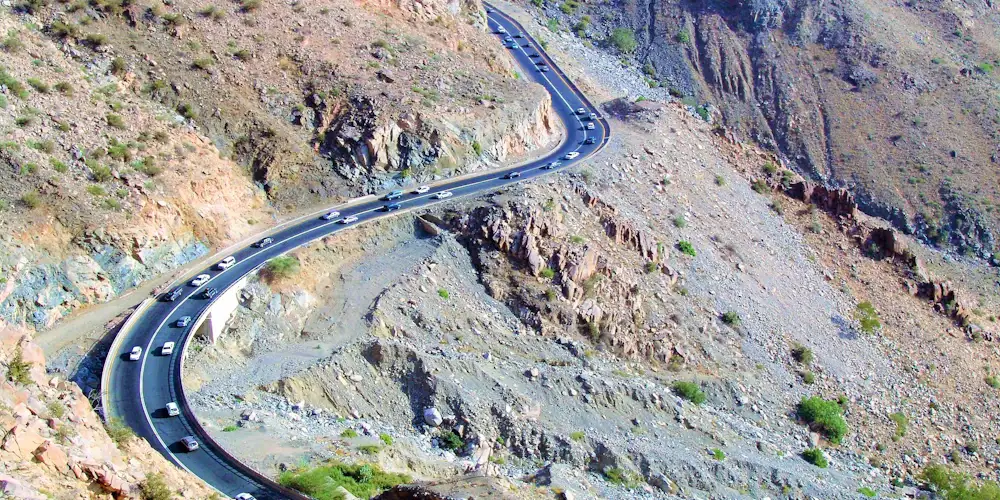
A cool mountain city of rose farms and rosewater stills, a winding drive up the escarpment from Jeddah.
What to do here →
Taif sits at about 1,880 m in the Sarawat Mountains east of Makkah, which keeps it far cooler than Jeddah and makes it one of the kingdom's most popular summer escapes. It is known as the City of Roses, for the Taif rose its farms grow for rosewater, oil and perfume. Most visitors drive up from Jeddah, two to three hours away depending on the route, and the mountain areas of Al Hada and Al Shafa lie just outside town.
Visit Saudi names two seasons: May to August, when Taif stays mild compared with the hot lowland cities, and December to February.
Sources: Visit Saudi: Taif, Visit Saudi: Rose water in Saudi, Visit Saudi: Top places in Taif for families, Wikivoyage: Ta'if, Wikivoyage: Saudi Arabia (checked 14 Oct)
A new top-end resort area of islands, coral reefs and mangroves between Umluj and Al Wajh.
What to do here →
Branded simply as The Red Sea, this new resort area spreads along the coast and across more than 90 islands between Umluj and Al Wajh, with Shura Island as its hub. Every resort sits firmly at the top end and there is little else nearby; you arrive through Red Sea International Airport or by road, about 550 km from Jeddah. The draw is the water: coral reefs, mangroves, sea turtles and very clear seas.
Sources: Visit Saudi: The Red Sea, Visit Saudi: Can't-miss experiences in The Red Sea, Visit Saudi: Four days in The Red Sea, Visit Saudi: Shura Island, Wikivoyage: Red Sea Project (checked 14 Oct)
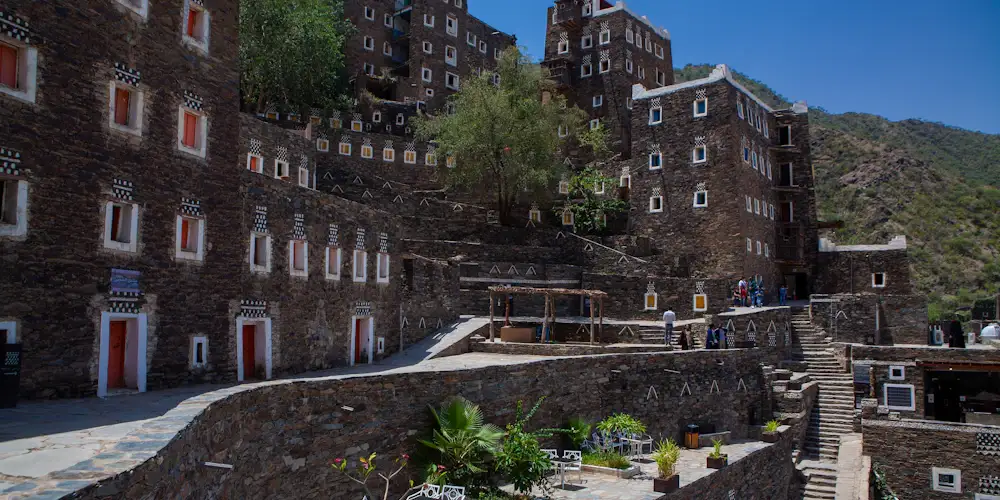
Misty southern mountains with juniper forests, cable cars, painted Asiri villages and stone tower houses.
What to do here →
Abha, capital of Asir in the far south-west, sits high in the Sarawat Mountains, and its mild climate and mist-covered peaks make it a favourite summer getaway for Saudis. Juniper forests cover the slopes around Al Soudah, which rises to 3,015 m, and the region is known for Al-Qatt Al-Asiri, the bold geometric wall painting done by women, which UNESCO added to its intangible heritage list in 2017. The UK government currently advises against all but essential travel to Asir province because of attacks from Yemen, so check the latest advice before you plan a trip here.
Visit Saudi recommends March to September, when Asir is milder than the rest of the country and light rain greens the hills.
Sources: Visit Saudi: Aseer, Visit Saudi: Aseer hiking guide, Visit Saudi: The cable cars of Abha, Visit Saudi: Top 5 cultural experiences in Aseer, Visit Saudi: Rijal Almaa Village, Visit Saudi: Al Muftaha, Wikivoyage: Abha, Wikivoyage: Asir, Wikivoyage: Saudi Arabia, UK FCDO: Saudi Arabia travel advice (checked 14 Oct)
Distances are long, so most visitors normally fly between regions: Riyadh to Jeddah takes about 90 minutes by air, and AlUla's airport has flights from both cities. The UK government currently warns that disruption and cancellations at Saudi airports are very likely, so confirm with your airline before you book. On the west coast the Haramain high-speed railway links Jeddah, which has a station at its airport, with King Abdullah Economic City and Madinah. Riyadh has a six-line metro; elsewhere taxis, Uber and Careem or a hire car are the usual way around.
Visa for Indian passports
Indian passport holders need a visa for Saudi Arabia before travel. Allow about 14 days for a first-time application. eVisa or visa on arrival if you hold a used US, UK or Schengen visa. Free 96-hour stopover visa on Saudia or flynas with an onward ticket. Tourist visa via VFS Tasheer with biometrics.
Before you book, check the Ministry of External Affairs travel advisories and the Consulate General of India, Jeddah for the latest guidance.
Getting there
2 airports FlyBun tracks, priced from your city. Live fares were checked in the last 48 hours; the rest are the lowest seen in 14 days.
Serves Jeddah's Al-Balad and the drive up to Taif, when travel advice allows: disruption and cancellations are very likely, so check current advice.
Jeddah month by month: weather and fares →Serves Riyadh, Diriyah and the Edge of the World when travel advice allows; disruption and cancellations are very likely, so check current advice first.
Riyadh month by month: weather and fares →Before you go
Travel advisory
There is a current advisory for this country; read it before booking.
Consulate General of India, Jeddah →Pay with the right card
Every FlyBun deal shows the bank card offers that cut its fare, with the booking site's fee counted.
See today's deals →Riyadh: The capital: Masmak Fort, the National Museum, the Kingdom Centre's Sky Bridge, old souqs and cheap Indian food. Diriyah and At-Turaif: The mud-brick first capital of the Saudi state, a UNESCO site, with dining above Wadi Hanifa at Bujairi Terrace. Edge of the World: Sheer cliffs at the end of the Tuwaiq escarpment, seen at sunset on a 4WD or tour trip from Riyadh. AlUla and Hegra: Hegra's Nabataean tombs, Saudi Arabia's first UNESCO site, plus a mud-brick old town and Elephant Rock. Jeddah: Al-Balad's coral-stone houses and souqs, a seafront Corniche with a towering fountain, and Red Sea diving. Taif: A cool mountain city of rose farms and rosewater stills, a winding drive up the escarpment from Jeddah. The Red Sea islands: A new top-end resort area of islands, coral reefs and mangroves between Umluj and Al Wajh. Abha and the Asir highlands: Misty southern mountains with juniper forests, cable cars, painted Asiri villages and stone tower houses.
A first trip takes about 8–11 nights: Riyadh (3 nights), Diriyah and At-Turaif (1 night), Edge of the World (1 night), AlUla and Hegra (2–3 nights), Jeddah (2–3 nights), Taif (1–2 nights). When travel advice allows, fly into Riyadh for the city, Diriyah and a sunset at the Edge of the World, fly on to AlUla for Hegra and the old town, then fly to Jeddah for Al-Balad and the Corniche and finish with a drive up the escarpment to Taif. The loop suits the cooler months, roughly November to March; in summer, when the lowlands bake, Taif is the mountain escape, and late March or April brings Taif's rose harvest.
Peak season is Dec–Feb. No official Saudi tourism page describing seasons could be opened, so these ratings are derived from the NASA POWER climate normals: highs sit at or above 38°C from May to October, ease to 31 to 36°C in November, March and April, and settle at 29 to 31°C from December to February with almost no rain in any month.
Indian passport holders need a visa for Saudi Arabia before travel. Allow about 14 days for a first-time application. eVisa or visa on arrival if you hold a used US, UK or Schengen visa. Free 96-hour stopover visa on Saudia or flynas with an onward ticket. Tourist visa via VFS Tasheer with biometrics.
The lowest return fare FlyBun has seen in the last 14 days is ₹15,018, Mumbai to Riyadh, for October 2026 departures. Fares change daily.
Places and things to do are written by FlyBun from official tourism, heritage and park sources, linked under each place, last checked 14 Oct. We leave out entry fees and opening hours because they change; check them before you go.
Watch a route and FlyBun alerts you free when its fare drops.