

Travel guide from India
USA
The United States is half a world away from India, a long-haul flight to a country whose mainland clocks run 9.5 to 13.5 hours behind Indian time. It spans a continent, so a first trip usually sticks to one coast: New York, Niagara Falls and Washington DC in the east, or San Francisco, Yosemite, Los Angeles, Las Vegas and the Grand Canyon in the west. Big cities have vegetarian restaurants and Indian neighbourhoods, notably in New York, New Jersey, Chicago and Houston, but small towns have far less choice.
- Best time
- May–Oct, Dec
- First trip
- 6–8 nights
- Visa
- Visa needed, 180 days
- Return flights
- from ₹67,892 ●
- Mumbai, checked in the last 48 h
Places to visit in USA
12 places in the order you would meet them on a first trip. Tap one for what to do there.
New York City
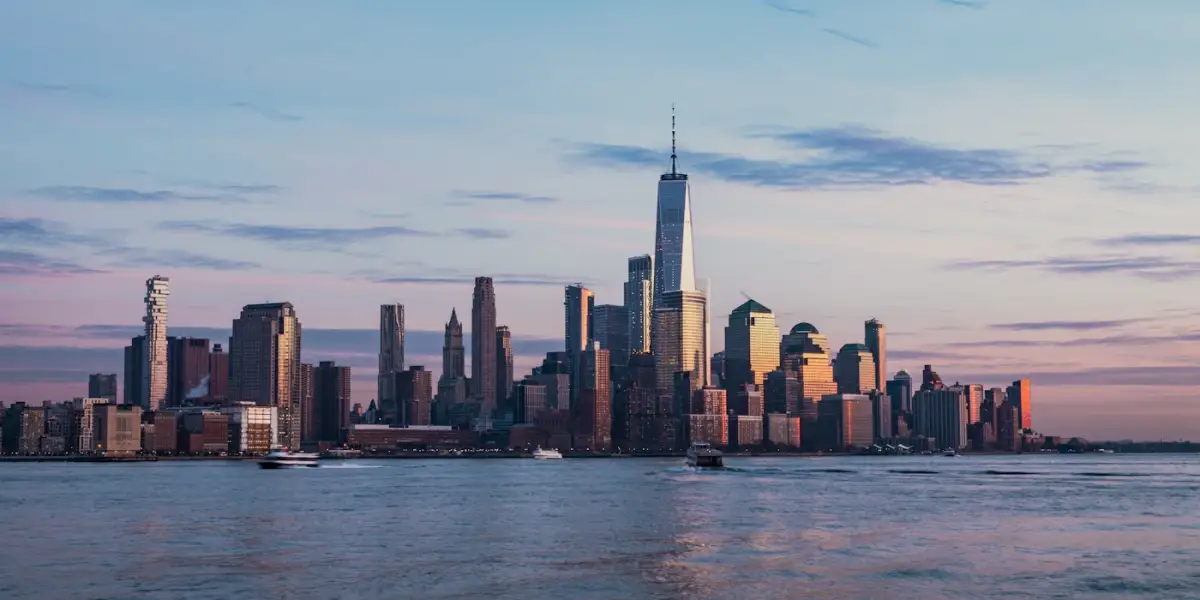
CitySkyscrapers, the Statue of Liberty, Central Park, Broadway and great museums, plus Indian food in Jackson Heights.
3–4 nightsabout 1 h by train from New York airport
New York City
CitySkyscrapers, the Statue of Liberty, Central Park, Broadway and great museums, plus Indian food in Jackson Heights.
New York is made up of five boroughs, and Manhattan, a long, narrow island between the Hudson and East rivers, holds most of the famous sights, from the towers of Midtown and Lower Manhattan to Times Square and the 850-acre Central Park. People from more than 180 countries live here, and the subway, the fastest way around, reaches every borough except Staten Island, including Queens, where Jackson Heights has a large South Asian neighbourhood. Summers (June to September) are hot and humid and winters can be very cold, so pack for the season.
What to do in New York City
- Statue of Liberty and Ellis Island. Ferries from The Battery cross to Liberty Island, where the copper statue, a gift from the people of France dedicated in 1886, rises about 93 m from the ground to the tip of its torch, then go on to Ellis Island, where more than 12 million immigrants were processed between 1892 and 1924.
- Central Park and the museums beside it. Walk the lawns, lakes and paths of the park, then spend a few hours in the Metropolitan Museum of Art, which stands in the park, or take children to the dinosaur skeletons and planetarium of the American Museum of Natural History on the Upper West Side.
- 9/11 Memorial and the Brooklyn Bridge. In Lower Manhattan, two one-acre pools with waterfalls fill the footprints of the Twin Towers, their bronze edges inscribed with the 2,983 names of those killed in the 2001 and 1993 attacks; afterwards, walk across the Brooklyn Bridge for views back over the skyline.
- Times Square, Broadway and the Empire State Building. See a musical in the Theater District around Times Square, where giant video screens and LED signs glow around the clock, and ride up the Empire State Building in Midtown for the view over the city.
- Eat in Jackson Heights. Take the subway to 74th Street and Roosevelt Avenue in Queens, the hub of a South Asian neighbourhood full of Indian restaurants (vegetarian ones among them), grocers and sari shops; in Manhattan, the blocks around Lexington Avenue and 29th Street in Murray Hill also have many Indian restaurants.
Sources: Wikivoyage: New York City, Wikivoyage: Manhattan, Wikivoyage: Queens, New York City Tourism + Conventions: Jackson Heights, New York City Tourism + Conventions: Guide to the 9/11 Memorial & Museum, National Park Service: Statue of Liberty National Monument, National Park Service: Statue of Liberty FAQs, National Park Service: Ellis Island, Brand USA (Visit The USA): New York City, Wikivoyage: United States of America, Wikivoyage: India (time zone), Destination DC: Washington, DC information for international visitors (time zone and daylight saving), Destination Niagara USA: FAQs (New York to Niagara Falls), Discover Los Angeles: Beginner's guide to Hollywood (driving and car culture), Destination DC: Getting around Washington, DC (checked 14 Oct)
Akshardham, Robbinsville (New Jersey)
HeritageDay tripA grand Hindu mahamandir, a stone-carved mandir and a stepped pond of holy-river water, plus Edison's Indian street.
about 1 h 30 min from New York airport
Akshardham, Robbinsville (New Jersey)
HeritageDay tripA grand Hindu mahamandir, a stone-carved mandir and a stepped pond of holy-river water, plus Edison's Indian street.
BAPS Swaminarayan Akshardham, in the New Jersey township of Robbinsville near Trenton, is a large Hindu campus centred on a grand mahamandir, with a stone-carved mandir, a welcome centre that introduces Hinduism to visitors of any faith, and a vegetarian café. Robbinsville is roughly an hour and a half by road from New York City, so it makes a day out, and Oak Tree Road in Edison is on the way, a street lined with Indian restaurants and shops.
What to do in Akshardham, Robbinsville (New Jersey)
- The Akshardham Mahamandir. Pramukh Swami Maharaj envisioned this campus, with the Mahamandir at its centre, to gather thousands of years of Hindu art, architecture and culture in America; dress modestly, with shoulders and knees covered, and remove your shoes before going inside.
- Nilkanth Varni and the stepped pond. At the entrance stands a 49-foot (15 m) image of Bhagwan Swaminarayan as the teenage yogi Nilkanth Varni, and a traditional Indian stepped pond holds water from India's 108 holy rivers and from rivers in all 50 US states.
- The mandir and welcome centre. Offer prayers before the murtis in the traditional mandir carved from stone, and learn about Hindu traditions in the welcome centre, which receives people of every religion and background.
- A vegetarian meal on campus. The campus café serves vegetarian Indian and Western dishes, and its food is offered to the Divine first, so what you eat is prasad.
- Oak Tree Road, Edison. On the way back to New York, browse the Indian restaurants, sweet shops, Bollywood films and sari stores of Oak Tree Road, about a 15-minute walk from Metropark station.
Sources: BAPS Swaminarayan Akshardham (official site): Explore, BAPS Swaminarayan Akshardham (official site): Visit, BAPS Swaminarayan Akshardham (official site): Home, Wikivoyage: Robbinsville (New Jersey), Wikivoyage: Edison (checked 14 Oct)
Niagara Falls (US side)
Hill countryGet soaked beside the American, Bridal Veil and Horseshoe Falls by boat and on wooden decks, then see them lit at night.
1 nightabout 2 h by flight from New York airportBest Jun–Aug
Niagara Falls (US side)
Hill countryGet soaked beside the American, Bridal Veil and Horseshoe Falls by boat and on wooden decks, then see them lit at night.
On the US side the falls lie within Niagara Falls State Park, created in 1885 as the oldest state park in the country and designed by the landscape architect Frederick Law Olmsted; it is open all year. The American side gives close, sidelong views of the water as it tips over the edge, from Prospect Point and from Goat Island, which separates the American Falls from the Horseshoe Falls, and there are hotels within walking distance of the park. Niagara Falls is about 400 miles (640 km) from New York City: a short flight to Buffalo and a 30 to 40-minute drive, or seven to eight hours by car or train.
What to do in Niagara Falls (US side)
- Maid of the Mist. The boat takes you along the foot of the falls and right into the spray, with ponchos handed out on board; it is seasonal and stops for the year in October or November.
- Cave of the Winds. Climb wooden stairs to the Hurricane Deck, right below the Bridal Veil Falls, for a soaking that feels like a tropical storm; unlike the boat, it runs all year.
- Goat Island, Luna Island and Terrapin Point. Follow the park paths across Goat Island to Luna Island, between the American and Bridal Veil Falls, and to Terrapin Point on the brink of the Horseshoe Falls; some of these viewpoints close in winter when they ice over.
- Observation Tower and Prospect Point. Look out over all three falls from the Observation Tower, or stand at Prospect Point, close beside the American Falls.
- The falls by night. After dark the falls are lit in changing colours every night, with fireworks on some evenings in season.
Summer is peak season, with average highs of about 21 to 27°C and every attraction running, the boat included; crowds are smaller the rest of the year, autumn colour usually peaks in the third week of October, and winter covers the falls in snow and ice.
Sources: Destination Niagara USA: Niagara Falls State Park, Destination Niagara USA: Niagara Falls State Park FAQs, Destination Niagara USA: About Niagara Falls, Destination Niagara USA: Weather and climate, Wikivoyage: Niagara Falls (New York) (checked 14 Oct)
Washington DC
CityThe National Mall's monuments and Smithsonian museums, the Capitol and Lincoln Memorial, and cherry blossom in spring.
2–3 nightsabout 1 h by train from Washington DC airportBest Mar–Apr
Washington DC
CityThe National Mall's monuments and Smithsonian museums, the Capitol and Lincoln Memorial, and cherry blossom in spring.
The US capital is built around the National Mall, a two-mile stretch of parkland from the Lincoln Memorial to the Capitol, lined with many of the country's best-known monuments and memorials and the Smithsonian museums. It is one of the easiest US cities to see without a car, on foot and by Metro, and Dulles airport, 26 miles west in Virginia, is linked to the city by the Metro's Silver Line. Summers are hot and very humid, while spring and autumn are the most pleasant seasons.
What to do in Washington DC
- Walk the National Mall. Start at the Lincoln Memorial, where Martin Luther King Jr gave his 'I Have a Dream' speech in 1963, look down the Reflecting Pool to the Washington Monument and walk east to the Capitol.
- Smithsonian museums. The National Air and Space Museum has the Wright brothers' 1903 Flyer and the Apollo 11 command module, the Natural History museum has huge dinosaur fossils and the blue Hope Diamond, and the American History museum keeps the original Star-Spangled Banner.
- Tidal Basin memorials. Walk round the Tidal Basin past the circular, Pantheon-style Jefferson Memorial and the Martin Luther King Jr Memorial, where King's 30-foot figure emerges from a block of granite; in spring the basin is ringed by cherry trees, a gift from Japan in 1912, in pale pink and white blossom.
- Udvar-Hazy Center near Dulles. Near the airport, the Air and Space Museum's second site holds aircraft and spacecraft too big for the Mall, including the space shuttle Discovery, a Concorde and an SR-71 Blackbird spy plane, so it fits well on the first or last day of a trip.
- National Archives and the Library of Congress. See original copies of the Declaration of Independence, the Constitution and the Bill of Rights at the National Archives, then the ornate Library of Congress building on Capitol Hill.
Peak bloom for the Tidal Basin's cherry trees most often falls in the final days of March or the opening days of April, though the date shifts with the weather each year and the blossom lasts only several days.
Sources: National Park Service: National Mall and Memorial Parks, National Park Service: Cherry Blossom Festival, National Park Service: Cherry blossom bloom watch, Destination DC: Getting around Washington, DC, Destination DC: Getting to Washington, DC, Wikivoyage: Washington, D.C., Wikivoyage: Washington, D.C./National Mall (checked 14 Oct)
San Francisco
CityThe Golden Gate Bridge, Alcatraz, cable cars on steep hills, and redwoods and Silicon Valley within a day trip.
3 nightsabout 30 min by train from San Francisco airportBest Sep–Oct
San Francisco
CityThe Golden Gate Bridge, Alcatraz, cable cars on steep hills, and redwoods and Silicon Valley within a day trip.
San Francisco covers a small, hilly square of land, about 11 km on each side, between the Pacific Ocean and San Francisco Bay, with Victorian houses on its steep streets and neighbourhoods as different as Chinatown and the Mission. Summer days often start foggy and you will want a jacket after dark in any season. BART trains run from the airport, about 16 km south of the city, to downtown, and the city makes a good base for day trips across the bay and down the peninsula.
What to do in San Francisco
- Walk the Golden Gate Bridge. Finished in 1937 and painted 'International Orange' so it shows up through the fog, the bridge has paths for walkers and cyclists; park at one end and walk out over the strait, dressed for strong wind.
- Alcatraz. Ferries from Pier 33 cross to the island that was a fort, a military prison and then a maximum-security federal penitentiary, and was occupied by Native American activists for 19 months from 1969; take a jacket, as the weather turns fast and there is no food on the island beyond snacks.
- Cable cars and Fisherman's Wharf. Ride one of the three cable car lines up and over the hills between Market Street and Fisherman's Wharf, where you can watch the sea lions and street performers, and walk down the zigzag block of Lombard Street on Russian Hill.
- Muir Woods. Just north of the Golden Gate Bridge, this protected forest of old-growth coast redwoods, the world's tallest kind of tree, has boardwalk trails along Redwood Creek.
- Silicon Valley by Caltrain. Commuter trains run down the peninsula to Palo Alto, home of Stanford University, and on to San Jose, the biggest city in the Bay Area and the heart of Silicon Valley.
Late September and October are the warmest time of year, after the summer wind and fog have mostly gone and before the winter rains start.
Sources: Wikivoyage: San Francisco, Wikivoyage: San Francisco/Golden Gate, National Park Service: Alcatraz Island, National Park Service: Alcatraz, plan your visit, National Park Service: Muir Woods National Monument, National Park Service: Golden Gate National Recreation Area (checked 14 Oct)
Yosemite National Park
Hill countrySheer granite walls like El Capitan and Half Dome, spring waterfalls and giant sequoias, four to five hours from SF.
2 nightsabout 4 h 30 min from San Francisco airportBest Apr–Jun
Yosemite National Park
Hill countrySheer granite walls like El Capitan and Half Dome, spring waterfalls and giant sequoias, four to five hours from SF.
Yosemite, a UNESCO World Heritage Site first protected in 1864, covers nearly 1,200 square miles of the Sierra Nevada and is best known for Yosemite Valley, where waterfalls pour off sheer granite walls. It is about 195 miles (314 km) from San Francisco, four to five hours by car, and a day tour leaves only a few hours in the park, so it is worth staying at least a night. Most of the park lies under snow from about November to May, when some roads close, and millions of people visit from April to October, so expect traffic in the valley.
What to do in Yosemite National Park
- Tunnel View. Stop at this viewpoint on the road into the valley for the classic picture of Yosemite, with Half Dome in the distance framed by El Capitan and Bridalveil Fall.
- Yosemite Falls. One of the world's tallest waterfalls drops in three stages, the upper fall alone 1,430 feet (436 m); a short loop trail leads to the foot of the lower fall, which roars from April to June but can be almost dry by August.
- Glacier Point. From this overlook about 3,200 feet (980 m) above the valley floor you look straight across to Half Dome and Yosemite Falls; the road up usually opens in late May and closes in November.
- Mariposa Grove of Giant Sequoias. Near the south entrance, the park's largest sequoia grove has more than 500 mature trees, among them the Grizzly Giant, about 1,800 years old; shuttle buses run from the welcome plaza, two miles away.
- Walk to Vernal Fall. The steep trail to Vernal Fall is a short, satisfying hike from the valley floor; stay well back from fast water and slippery rock near the falls.
Spring snowmelt brings the waterfalls to their fullest, with peak flow usually in May or June; Yosemite Falls can be a trickle or dry by August, and the road to Glacier Point opens only from about late May.
Sources: National Park Service: Yosemite, plan your visit, National Park Service: Yosemite, driving directions, National Park Service: Yosemite waterfalls, National Park Service: Yosemite weather, National Park Service: Restoration of the Mariposa Grove of Giant Sequoias, Wikivoyage: Yosemite National Park, Wikivoyage: San Francisco (day trips) (checked 14 Oct)
Los Angeles
CityHollywood's Walk of Fame and studio tours, city views from Griffith Observatory, Santa Monica's beach and Disneyland.
3 nightsabout 30 min from Los Angeles airport
Los Angeles
CityHollywood's Walk of Fame and studio tours, city views from Griffith Observatory, Santa Monica's beach and Disneyland.
Los Angeles is a sprawling patchwork of neighbourhoods and separate cities, stretching almost 50 miles north to south from the San Fernando Valley down to the port, and it is built around the car. The film industry is the big draw, from Hollywood's landmarks to working studios, and the climate is mild, with around 292 days of full or partial sun a year, though May and June are often grey and overcast on the coast. LAX is about 16 miles from Downtown, beside the beach towns.
What to do in Los Angeles
- Hollywood Boulevard and the Hollywood Sign. Walk the Walk of Fame to the TCL Chinese Theatre, opened as Grauman's in 1927, whose forecourt holds the handprints and footprints of film stars, and look up to the 45-foot letters of the Hollywood Sign, dedicated in 1923.
- Griffith Observatory. The Art Deco observatory on Mount Hollywood, opened in 1935, looks out from the Pacific to Downtown and has a planetarium and a public telescope for night-time viewing.
- Universal Studios Hollywood. Ride the tram on the Studio Tour through the backlot of a working film studio, then the theme park rides, including the Wizarding World of Harry Potter and Super Nintendo World.
- Santa Monica Pier and the beach. The pier, once the western end of Route 66, has a small amusement park on it, and a beach path runs on to Venice Beach.
- Disneyland in Anaheim. Disneyland, which opened in 1955, is the heart of the Disneyland Resort in Anaheim, in Orange County south-east of Los Angeles.
Sources: Discover Los Angeles: Beginner's guide to Hollywood, Discover Los Angeles: The Griffith Observatory, the story of an LA icon, Discover Los Angeles: TCL Chinese Theatre, the story of an LA icon, Discover Los Angeles: The best of Universal Studios Hollywood, Discover Los Angeles: A basic guide to LAX, Wikivoyage: Los Angeles, Wikivoyage: Los Angeles/Hollywood, Wikivoyage: Santa Monica, Wikivoyage: Anaheim, Wikivoyage: Los Angeles International Airport (checked 14 Oct)
Las Vegas
CityThe neon Strip of themed casino resorts and shows, Fremont Street's light canopy, and Hoover Dam nearby.
2 nightsabout 1 h 30 min by flight from Los Angeles airport
Las Vegas
CityThe neon Strip of themed casino resorts and shows, Fremont Street's light canopy, and Hoover Dam nearby.
Las Vegas grew out of the southern Nevada desert after it was founded in 1905 and is now famous for the Strip, a brightly lit line of giant themed casino resorts with copies of the Eiffel Tower, the Sphinx and the Statue of Liberty, and for its stage shows, thrill rides, restaurants and nightlife. The airport is only a few miles from the Strip, a short taxi ride away, and tour companies run day trips from the city to the Grand Canyon. Summers are extremely hot, with average July highs of about 40°C.
What to do in Las Vegas
- Walk the Strip at night. Stroll Las Vegas Boulevard after dark, when the resorts, many linked by bridges and walkways, light up their copies of world landmarks and their elaborate fountain displays.
- Fremont Street. Downtown, the city's oldest casinos stand along Fremont Street under a canopy that doubles as a huge LED screen for light shows.
- Hoover Dam. About 45 minutes' drive east of the city, the great dam on the Colorado River was built between 1931 and 1936 and brought thousands of workers to the young town.
- Red Rock Canyon. Half an hour west of the Strip, red sandstone cliffs make a quiet morning away from the casinos.
Sources: Las Vegas Convention and Visitors Authority (Visit Las Vegas): Getting here, Las Vegas Convention and Visitors Authority (Visit Las Vegas): Getting around, Wikivoyage: Las Vegas (checked 14 Oct)
Grand Canyon (South Rim)
Hill countryStand on the rim of a mile-deep canyon cut by the Colorado River, with viewpoints along a paved rim trail.
1–2 nightsabout 6 h by flight from Los Angeles airportBest Mar, Nov
Grand Canyon (South Rim)
Hill countryStand on the rim of a mile-deep canyon cut by the Colorado River, with viewpoints along a paved rim trail.
The Grand Canyon, a UNESCO World Heritage Site in northern Arizona, runs 277 miles (446 km) along the Colorado River and is about a vertical mile (some 1,500 m) deep from rim to river near Grand Canyon Village. Its South Rim stays open all year, draws roughly 90% of the national park's visitors and lies about 275 miles (440 km) by road from Las Vegas airport, or roughly four hours' drive from Phoenix, so it is worth staying at least a night. Some tours from Las Vegas go instead to Grand Canyon West, run by the Hualapai Tribe outside the national park and home to the Skywalk, about five hours by road from the South Rim.
What to do in Grand Canyon (South Rim)
- Mather Point and the Rim Trail. Most visitors get their first look at the canyon from Mather Point by the visitor centre; then follow the paved, mostly level Rim Trail along the edge to quieter viewpoints.
- Hermit Road by shuttle. From March to November the road west to Hermits Rest is closed to private cars and park shuttle buses stop at the viewpoints along it; at the far end is a stone-and-timber building designed by Mary Colter.
- Desert View Drive. Drive the 23 miles (37 km) east from Grand Canyon Village, stopping at viewpoints along the way, to the Desert View Watchtower, another Mary Colter building.
- A short way down the Bright Angel Trail. The park's most popular trail zigzags down the canyon wall from Grand Canyon Village; go only part of the way, carry plenty of water, and remember that the climb back up is the hardest part.
- Sunrise and sunset at the rim. Dawn and dusk are the classic times on the rim, with guided tours at both; the inner canyon can pass 38°C on summer afternoons, so do not head far down in the heat.
Spring, summer and autumn bring heavy crowds; early spring and late autumn are quieter, while November to February is the least crowded time but brings winter weather.
Sources: National Park Service: Grand Canyon FAQs, National Park Service: Grand Canyon directions and transportation, National Park Service: Grand Canyon weather, webcams and road conditions, Wikivoyage: Grand Canyon, Wikivoyage: Las Vegas (checked 14 Oct)
Chicago
CitySkyscrapers from a river boat, Anish Kapoor's Bean, the Art Institute and Devon Avenue's Indian food, on Lake Michigan.
2–3 nightsabout 1 h by train from Chicago airportBest May–Jun, Sep–Oct
Chicago
CitySkyscrapers from a river boat, Anish Kapoor's Bean, the Art Institute and Devon Avenue's Indian food, on Lake Michigan.
Chicago, on the shore of Lake Michigan, bills itself as the birthplace of the skyscraper, and its downtown Loop, threaded by elevated trains, is full of landmark towers, big museums and lakeside parks. Its population is among the most ethnically mixed of any US city, with a large South Asian community around Devon Avenue on the North Side. Summer brings beaches and festivals, while winters, from December to March, are bitterly cold and windy; the Blue Line train takes about an hour from O'Hare to the Loop.
What to do in Chicago
- Architecture river cruise. Narrated boat tours on the Chicago River glide past dozens of landmark buildings and are the easiest introduction to the city's architecture.
- Millennium Park and the Bean. Photograph the skyline in the mirror-like surface of Cloud Gate, Anish Kapoor's sculpture known to everyone as the Bean, and let children splash under the video-screen towers of the Crown Fountain in warm weather.
- Art Institute of Chicago. Founded in 1879 and guarded by bronze lions, it is one of the country's oldest and largest art museums, famous for its Impressionist paintings, with Asian galleries that include Hindu and Buddhist sculpture.
- Skydeck at Willis Tower. Step out onto The Ledge, glass boxes jutting from the 103rd floor about 1,353 feet (412 m) up, with views that reach up to four states on a clear day.
- Devon Avenue. In West Ridge on the North Side, Devon Avenue is the main street of Chicago's Indian and Pakistani communities, with restaurants, bakeries, sari and clothing shops and spice and grocery stores; the 155 Devon bus runs its length from the Red Line.
May and September are mild and pleasant, June is mostly fine apart from sudden thunderstorms, and October rarely needs more than a light coat; December to March is very cold, with bitter wind chill.
Sources: Choose Chicago: First-time visit, Choose Chicago: Find the Chicago boat tour for you, Choose Chicago: Millennium Park campus, Choose Chicago: Visit the Art Institute of Chicago, Choose Chicago: Skydeck Chicago, Choose Chicago: West Ridge, Choose Chicago: Chicago year-round, Wikivoyage: Chicago, Wikivoyage: Chicago/Loop, Wikivoyage: Chicago/Rogers Park (checked 14 Oct)
Orlando
Theme parkWalt Disney World, Universal, SeaWorld and LEGOLAND for families, plus rockets at the Kennedy Space Center.
3–4 nightsabout 30 min from Orlando airportBest Dec–Feb
Orlando
Theme parkWalt Disney World, Universal, SeaWorld and LEGOLAND for families, plus rockets at the Kennedy Space Center.
Orlando, in central Florida, is often called the world's theme park capital: Visit Orlando counts 10 theme parks plus water parks, led by Walt Disney World, which opened in 1971 with the Magic Kingdom, and Universal Orlando. Only Universal lies inside the city limits, with Disney World and SeaWorld just outside, and Orlando International Airport is about 12.5 miles south-east of downtown. Winters are mild and dry, summers hot and humid with afternoon showers, and the hurricane season runs from June to November.
What to do in Orlando
- Walt Disney World. Four theme parks, Magic Kingdom with Cinderella Castle, EPCOT, Disney's Hollywood Studios with Star Wars: Galaxy's Edge, and Disney's Animal Kingdom with its open-air Kilimanjaro Safaris, plus two water parks and the Disney Springs shopping and dining district.
- Universal Orlando. Universal Studios Florida, Islands of Adventure and the newest park, Epic Universe, together with the Volcano Bay water park, with the Wizarding World of Harry Potter for fans.
- SeaWorld and LEGOLAND. SeaWorld mixes animal encounters with roller coasters, while LEGOLAND Florida, built for children aged 2 to 12, adds a LEGO theme park, a water park and a Peppa Pig park.
- Kennedy Space Center. East of Orlando on the Space Coast, the spaceport built for the Apollo missions, where Apollo 11 lifted off in 1969, has a visitor complex with a rocket garden, the Space Shuttle Atlantis and bus tours to the Apollo/Saturn V Center; drive out on the Beachline Expressway or join a day tour.
- Springs and manatees. Blue Spring State Park, about an hour from the tourist districts, is known for the manatees that gather in its clear spring water, especially in the colder months.
Winter (December to February) is mild and dry, good for long days outdoors; June to August is hot and humid with brief afternoon storms, and the hurricane season runs from June to November, most active from August to October.
Sources: Visit Orlando: Theme parks, Visit Orlando: Walt Disney World Resort, Visit Orlando: Universal Orlando Resort, Visit Orlando: The Wizarding World of Harry Potter, Visit Orlando: Weather, Visit Orlando: Nature and outdoors, Visit Orlando: Fast facts, Wikivoyage: Orlando, Wikivoyage: Kennedy Space Center, Wikivoyage: Space Coast (checked 14 Oct)
Houston
CityTram tours of NASA's Johnson Space Center, a compact Museum District and Indian food in the Mahatma Gandhi District.
1–2 nightsabout 30 min from Houston airportBest Oct–Apr
Houston
CityTram tours of NASA's Johnson Space Center, a compact Museum District and Indian food in the Mahatma Gandhi District.
Houston, the fourth-largest city in the US, is a spread-out, hot and humid city and the home of Space Center Houston, the visitor centre of NASA's Johnson Space Center, in Webster to the south-east. It also has a Museum District of 18 museums and cultural institutions within a few blocks of each other and one of the country's largest foreign-born populations, with the Mahatma Gandhi District in the west of the city known for Indian and Pakistani food. The main airport, IAH, is 23 miles north of downtown.
What to do in Houston
- Space Center Houston tram tours. Tram tours from the visitor centre go onto NASA's Johnson Space Center campus, taking in astronaut training facilities and a rocket park.
- Starship Gallery and the shuttle carrier. See flown spacecraft from the Mercury, Gemini and Apollo programmes and moon rocks in the Starship Gallery, then climb into the shuttle replica Independence and the giant NASA 905 carrier aircraft it sits on.
- Museum District and Hermann Park. South of downtown, the Museum District includes the Museum of Fine Arts and the Houston Museum of Natural Science, near Hermann Park, with its gardens, and the Houston Zoo.
- Mahatma Gandhi District. In west Houston, the busy streets around Hillcroft, named the Mahatma Gandhi District, are the city's best bet for Indian and Pakistani restaurants.
- Buffalo Bayou. Walk the bayou paths to Eleanor Tinsley Park for the skyline view, or rent a kayak at Lost Lake to paddle the water trails.
October to April avoids the heat; summers are hot and very humid, worst around August, and like the rest of the Gulf Coast the city is exposed to hurricanes.
Sources: Visit Houston: About Houston, Space Center Houston (official visitor centre of NASA Johnson Space Center): Home, Space Center Houston: Exhibits and experiences, Wikivoyage: Houston, Wikivoyage: Houston/South Inner Loop, Wikivoyage: Webster (Texas) (checked 14 Oct)
A first trip: 6–8 nights
- New York City · 3–4n
- →Akshardham, Robbinsville (New Jersey)
- →Niagara Falls (US side) · 1n
- →Washington DC · 2–3n
Fly into New York for the city and a day out to Akshardham in New Jersey, take a short flight to Buffalo for a night at Niagara Falls, then fly on to Washington DC and home from Dulles; Washington is prettiest at cherry blossom time (most likely late March or early April), while summer is Niagara's peak season, when its boat ride is running. For the west coast instead, fly into San Francisco, drive to Yosemite and on to Los Angeles, then fly to Las Vegas for the Grand Canyon: spring brings Yosemite's waterfalls at their fullest, and September is San Francisco's driest month.
Getting around
Distances are huge: a coast-to-coast flight takes five to six hours, so most visitors fly between regions and pair places on one coast, such as New York with Niagara Falls (a short flight to Buffalo, or seven to eight hours by car or train) and Washington DC (Amtrak's Northeast Regional trains link the two cities), or San Francisco with Yosemite, Los Angeles, Las Vegas and the Grand Canyon. New York, Washington, Chicago and San Francisco are easy to get around by subway, Metro, bus and cable car, but Los Angeles is built around the car, and the national parks and Las Vegas side trips are easiest with a hire car (Americans drive on the right) or on a tour. Chicago, Orlando and Houston work best as separate stops reached by air.
When to go
Chicago month by month: weather and fares →Dallas month by month: weather and fares →Houston month by month: weather and fares →Los Angeles month by month: weather and fares →New York month by month: weather and fares →Orlando month by month: weather and fares →San Francisco month by month: weather and fares →Washington DC month by month: weather and fares →Peak Shoulder Off-season
NYC Tourism describes hot, sunny summers, crisp autumns, winters that are cold and sometimes snowy, and crowds that thin after New Year's. May to October are the warm months and December is the holiday rush; January to March is cold with the fewest visitors.
Flights to USA from India
Visa for Indian passports
Indian passport holders need a visa for USA before travel. Allow about 210 days for a first-time application. An interview waiver may apply when renewing a B1/B2 that expired within the last 12 months. Interview waits in India are about 6–12 months. Apply very early.
Before you book, check the Ministry of External Affairs travel advisories for the latest guidance.
USA: questions
What are the best places to visit in USA?
New York City: Skyscrapers, the Statue of Liberty, Central Park, Broadway and great museums, plus Indian food in Jackson Heights. Akshardham, Robbinsville (New Jersey): A grand Hindu mahamandir, a stone-carved mandir and a stepped pond of holy-river water, plus Edison's Indian street. Niagara Falls (US side): Get soaked beside the American, Bridal Veil and Horseshoe Falls by boat and on wooden decks, then see them lit at night. Washington DC: The National Mall's monuments and Smithsonian museums, the Capitol and Lincoln Memorial, and cherry blossom in spring. San Francisco: The Golden Gate Bridge, Alcatraz, cable cars on steep hills, and redwoods and Silicon Valley within a day trip. Yosemite National Park: Sheer granite walls like El Capitan and Half Dome, spring waterfalls and giant sequoias, four to five hours from SF. Los Angeles: Hollywood's Walk of Fame and studio tours, city views from Griffith Observatory, Santa Monica's beach and Disneyland. Las Vegas: The neon Strip of themed casino resorts and shows, Fremont Street's light canopy, and Hoover Dam nearby. Grand Canyon (South Rim): Stand on the rim of a mile-deep canyon cut by the Colorado River, with viewpoints along a paved rim trail. Chicago: Skyscrapers from a river boat, Anish Kapoor's Bean, the Art Institute and Devon Avenue's Indian food, on Lake Michigan. Orlando: Walt Disney World, Universal, SeaWorld and LEGOLAND for families, plus rockets at the Kennedy Space Center. Houston: Tram tours of NASA's Johnson Space Center, a compact Museum District and Indian food in the Mahatma Gandhi District.
How many days do you need for USA?
A first trip takes about 6–8 nights: New York City (3–4 nights), Akshardham, Robbinsville (New Jersey) (1 night), Niagara Falls (US side) (1 night), Washington DC (2–3 nights). Fly into New York for the city and a day out to Akshardham in New Jersey, take a short flight to Buffalo for a night at Niagara Falls, then fly on to Washington DC and home from Dulles; Washington is prettiest at cherry blossom time (most likely late March or early April), while summer is Niagara's peak season, when its boat ride is running. For the west coast instead, fly into San Francisco, drive to Yosemite and on to Los Angeles, then fly to Las Vegas for the Grand Canyon: spring brings Yosemite's waterfalls at their fullest, and September is San Francisco's driest month.
What is the best time to visit USA?
Peak season is May–Oct, Dec. NYC Tourism describes hot, sunny summers, crisp autumns, winters that are cold and sometimes snowy, and crowds that thin after New Year's. May to October are the warm months and December is the holiday rush; January to March is cold with the fewest visitors.
Do Indians need a visa for USA?
Indian passport holders need a visa for USA before travel. Allow about 210 days for a first-time application. An interview waiver may apply when renewing a B1/B2 that expired within the last 12 months. Interview waits in India are about 6–12 months. Apply very early.
How much is a flight to USA from India?
The lowest return fare FlyBun has seen in the last 14 days is ₹63,651, Delhi to New York, for January 2027 departures. Fares change daily.
Places and things to do are written by FlyBun from official tourism, heritage and park sources, linked under each place, last checked 14 Oct. We leave out entry fees and opening hours because they change; check them before you go.
Watch a route and FlyBun alerts you free when its fare drops.